
Technology
How Many Seconds in a Day: Unveiling the Exact Number

Everyone knows there are 24 hours in a day, but have you ever wondered how many seconds that is? When we break down a day into its smallest measurable units, the answer is more surprising than you might think. Understanding seconds in a day is not only about simple math—it’s about how we experience time, how scientists use it, and why it matters for daily life. This article dives deep into the numbers, their history, and practical uses, showing you everything you need to know about the number of seconds in a day.
The Basic Calculation: How Many Seconds In A Day?
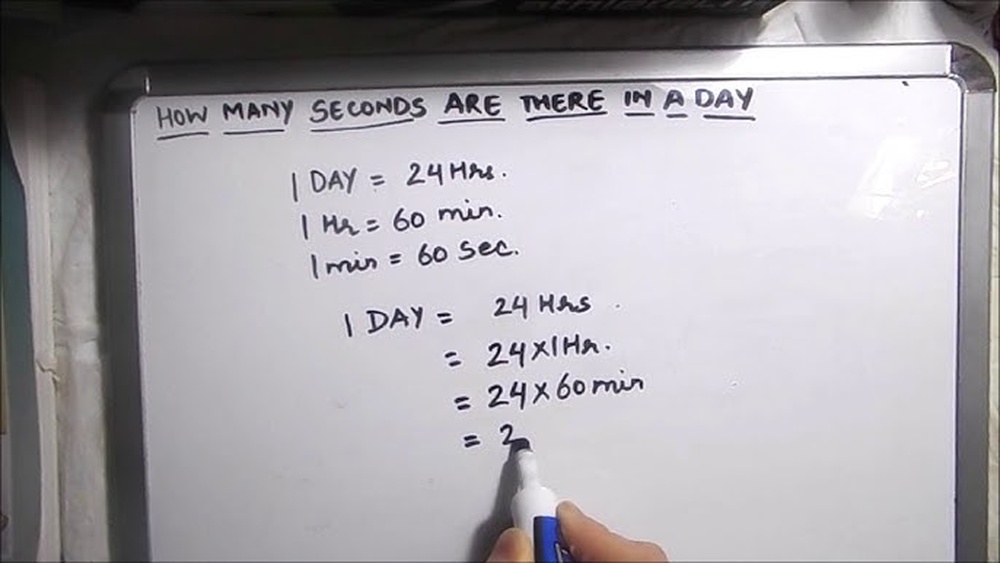
Let’s start with the basic math. A day has:
- 24 hours
- Each hour has 60 minutes
- Each minute has 60 seconds
Multiply these together:
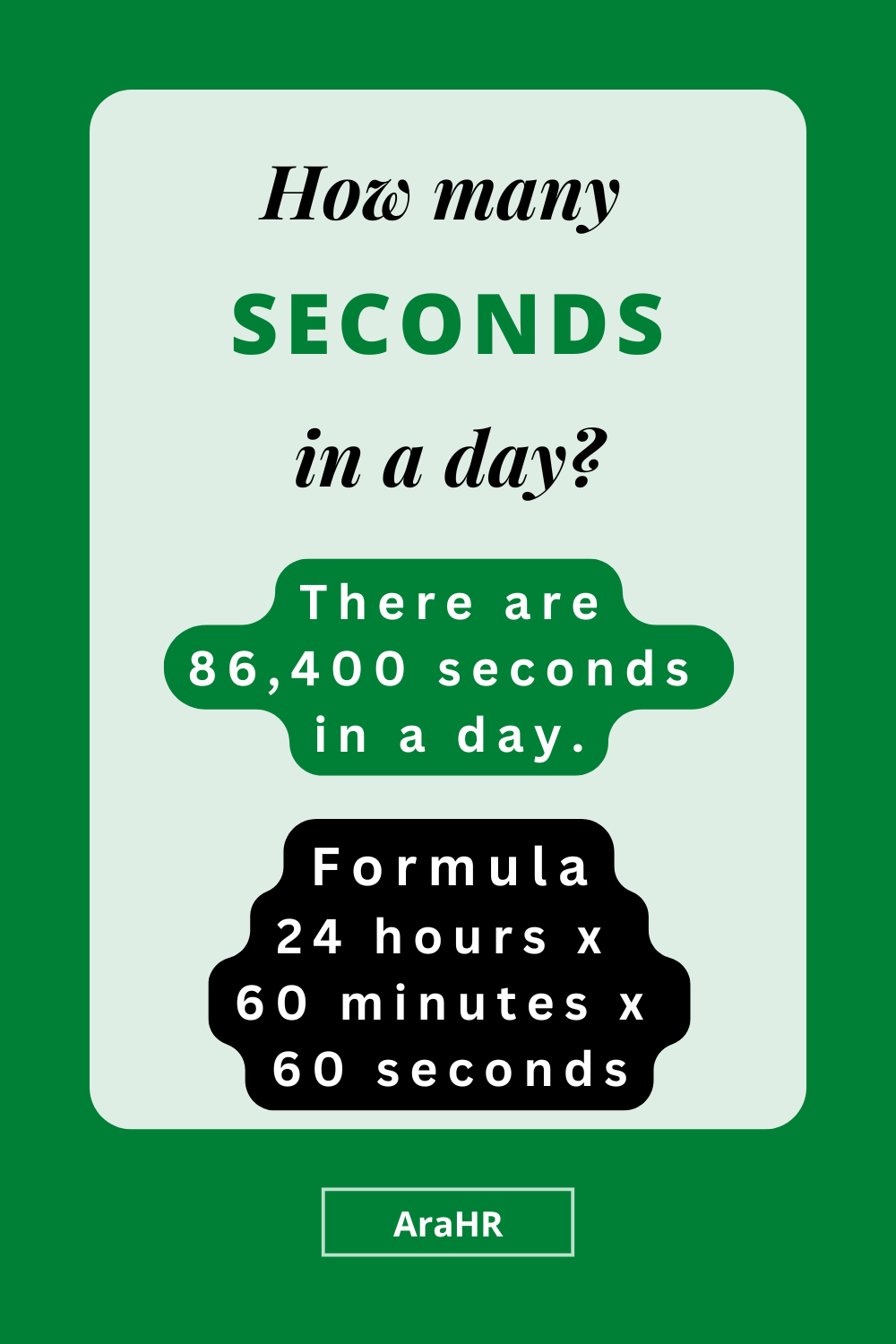
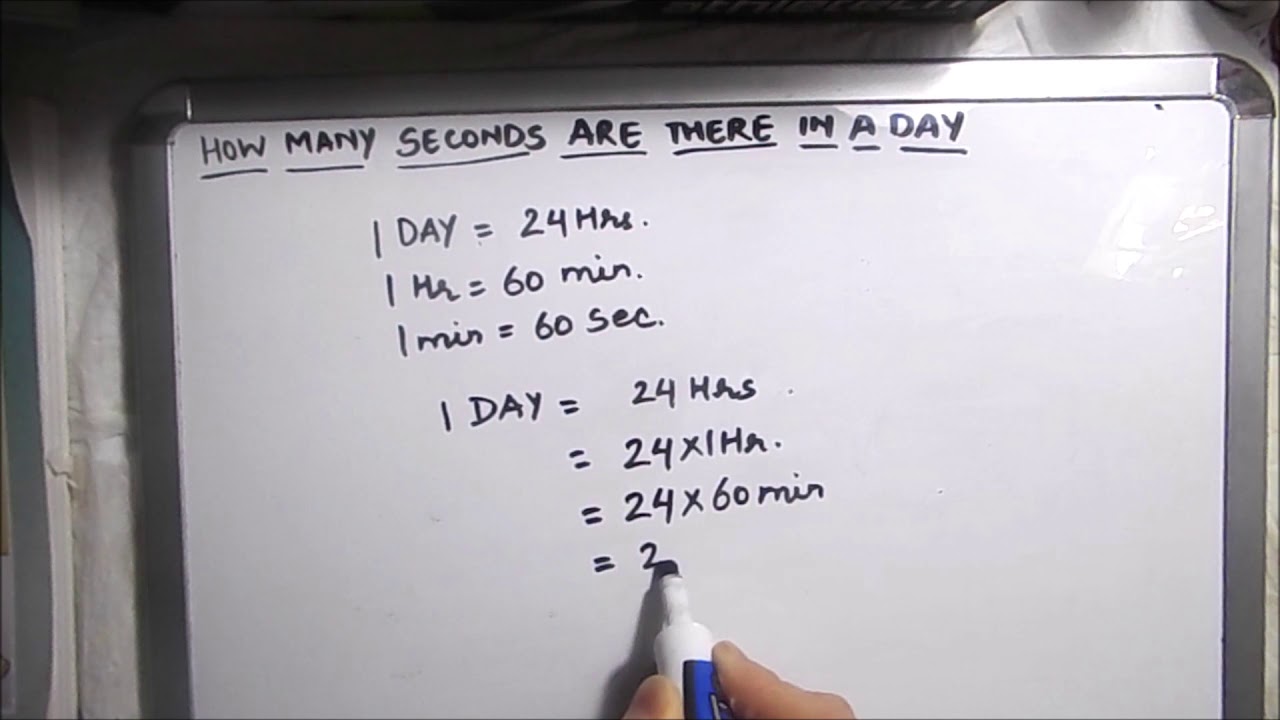
24 hours × 60 minutes × 60 seconds = 86,400 seconds
So, there are 86,400 seconds in a day.
This simple formula is used worldwide for most calculations. But is it always this straightforward? There are cases when the answer changes, and we’ll explore those soon.
Why Seconds Matter
We often overlook seconds because they feel so small. Yet, seconds are important in many areas:
- In science, seconds are the base unit for measuring time.
- Computers use seconds for timing tasks and processing data.
- Athletes measure their performance in seconds.
- Navigation and GPS rely on very precise timing.
If you miss a second, you can miss an important event, a deadline, or even a gold medal. Seconds are everywhere, guiding our routines and innovations.
History Of The Second
The concept of a second has a long history. Ancient civilizations used sundials and water clocks to measure time, but these were not very accurate. The division of hours and minutes came later, and the second became a standard unit.
The modern definition is based on atomic clocks. One second is now defined as the time it takes for a cesium atom to vibrate 9,192,631,770 times. This precision helps keep global time consistent.
Leap Seconds: When Days Aren’t Always The Same
Most days have 86,400 seconds, but some days are a bit longer. This happens because Earth’s rotation is not perfectly stable. To keep atomic time and solar time in sync, scientists add a leap second.
A leap second is an extra second added to the end of a day. When this happens:
- That day has 86,401 seconds
- Leap seconds are rare (about once every few years)
- They are announced by the International Earth Rotation and Reference Systems Service (IERS)
This adjustment keeps clocks accurate and prevents problems in technology, finance, and communication.
Comparing Seconds, Minutes, And Hours
Understanding how seconds fit into the bigger picture can help. Here’s a comparison of time units:
| Unit | Seconds per unit | Units in a day | Total seconds |
|---|---|---|---|
| Second | 1 | 86,400 | 86,400 |
| Minute | 60 | 1,440 | 86,400 |
| Hour | 3,600 | 24 | 86,400 |
No matter which unit you use, the total number of seconds is always the same—unless a leap second is added.
How Seconds Affect Daily Life
You may not think about seconds every day, but they influence much more than you realize. Here are some examples:
- Schedules: Trains and flights often leave exactly on the second.
- Sports: Races are won or lost by fractions of a second.
- Technology: Computers process millions of operations every second.
- Finance: Stock trades can happen in milliseconds.
Missing a single second can mean missing an opportunity or causing a mistake. That’s why timing is so important.
Seconds In Different Time Systems
Not every day is the same everywhere. Some systems use different ways to measure time. Here’s a look at how seconds fit into various systems:
Solar Day Vs. Sidereal Day
A solar day is the time it takes for the sun to return to the same position in the sky—24 hours (86,400 seconds).
A sidereal day is the time it takes for Earth to complete one rotation relative to distant stars. It’s a bit shorter:
- Sidereal day: 23 hours, 56 minutes, 4 seconds
- In seconds: 86,164 seconds
| Type of Day | Hours | Minutes | Seconds | Total Seconds |
|---|---|---|---|---|
| Solar Day | 24 | 0 | 0 | 86,400 |
| Sidereal Day | 23 | 56 | 4 | 86,164 |
Most daily life follows the solar day, but astronomers use sidereal days.
Unix Time And Computers
Computers use a system called Unix time, which counts seconds since January 1, 1970. This makes calculations easy and avoids confusion between time zones. Programs and servers rely on this standard.
Seconds In A Year, Month, And Week
If you want to compare days to longer periods, here’s how the numbers add up:
- Week: 7 days × 86,400 seconds = 604,800 seconds
- Month (30 days): 30 × 86,400 = 2,592,000 seconds
- Year (365 days): 365 × 86,400 = 31,536,000 seconds
Leap years and leap seconds can change these numbers slightly.
| Period | Days | Total Seconds |
|---|---|---|
| Day | 1 | 86,400 |
| Week | 7 | 604,800 |
| Month | 30 | 2,592,000 |
| Year | 365 | 31,536,000 |
This helps when planning projects, calculating deadlines, or understanding long-term changes.
Credit: arahr.com
Practical Uses Of Knowing Seconds In A Day
Knowing there are 86,400 seconds in a day is more useful than you might expect. Here are some common uses:
- Scheduling: Helps set exact times for meetings, reminders, and alarms.
- Programming: Computer programs often use seconds for timing events and processes.
- Science: Experiments and observations need precise timing.
- Fitness: Tracking exercise, rest, and nutrition often uses seconds.
- Education: Teachers and students use seconds to time tests and activities.
A non-obvious insight: In scientific research, even tiny errors in counting seconds can lead to big mistakes. For example, satellites and GPS systems need exact timing to give accurate locations. If the timing is off by just one second, the location can be wrong by hundreds of meters.
Another insight: In trading and finance, algorithms make decisions in microseconds (millionths of a second). Understanding how many seconds are available in a day helps build reliable systems that run 24/7.
Fun Facts About Seconds
- The word “second” comes from the Latin “secunda,” meaning “second division.”
- The world record for the fastest 100-meter sprint is 9.58 seconds (Usain Bolt).
- Lightning travels about 300,000 kilometers per second.
- The average person blinks every 4 to 6 seconds.
Time is everywhere, and seconds make up the fabric of our lives.

Credit: www.mashupmath.com
How To Use Seconds Wisely
Many people waste seconds without realizing it. Here are some ways to use your seconds better:
- Set timers for tasks to stay focused.
- Use seconds to measure progress, not just hours.
- Practice mindfulness by paying attention to each moment.
- Break big tasks into small chunks using seconds.
You can achieve more by respecting every second. Small efforts, repeated each day, add up to big results.
Scientific Standards For Measuring Seconds
For most of history, people used natural events to measure time. Now, scientists use atomic clocks. These clocks are so accurate that they would only lose one second every millions of years.
The International System of Units (SI) defines the second based on atomic vibrations. This ensures every country uses the same standard, helping with communication and technology.
For more on how seconds are measured and maintained, you can read about atomic clocks at Wikipedia.
Credit: www.youtube.com
Common Mistakes When Calculating Seconds
Beginners often make mistakes when converting time:
- Forgetting to multiply hours × minutes × seconds.
- Confusing leap seconds and leap years.
- Mixing up solar and sidereal days.
- Ignoring time zone differences.
- Not accounting for daylight saving changes.
Always double-check your calculations, especially for important events or deadlines.
Frequently Asked Questions
What Is A Leap Second, And How Often Is It Added?
A leap second is an extra second added to keep atomic time in sync with Earth’s rotation. It’s added about every few years, but there’s no fixed schedule. The decision is made by international timekeeping organizations.
Why Are Seconds Important In Technology?
Seconds help computers and networks keep accurate time. Many systems, like GPS and financial markets, need precise timing to work correctly. Even a tiny error can cause big problems.
Are All Days Exactly 86,400 Seconds?
Most days are 86,400 seconds, but some have 86,401 seconds due to leap seconds. Sidereal days, used in astronomy, are slightly shorter than solar days.
How Do Scientists Measure A Second?
Scientists use atomic clocks. A second is defined as 9,192,631,770 vibrations of a cesium atom. This is the global standard for measuring time.
Can Missing A Second Cause Real Problems?
Yes. Missing a second can lead to errors in data, mistakes in scheduling, and problems in technology. In finance and navigation, even small timing errors can have big consequences.
Time is one of the most valuable things we have. By understanding how many seconds in a day, you gain a new perspective on how you spend your time, how the world measures it, and why every second counts. Whether you’re setting a timer, managing a project, or simply curious, knowing there are 86,400 seconds in a day helps you use your time wisely.

How Many Seconds in a Day: Unveiling the Exact Number

How Many NBA Players Are Jehovah Witnesses: Surprising Facts

How to Start a Blog: Ultimate Guide to Launch Success

How Long Do Idiots Live: Surprising Facts and Myths Explained

Why is the Moon Low And Orange Tonight: Causes and Meanings

How Many Jobs are Available in Public Utilities: 2026 Guide

Start A Blogging Guide: How To Build An Effective Blog

Which TEFL Level Should I Choose?

How to Learn Spanish and Become Fluent as an Adult

10 Best Places To Teach English Abroad And Save Money

10 Free Plus Size Clothing Catalogs That You Can Request Online

List of 100 High Authority Free Guest Blogging Sites that Bring You Success on The Web

The Secret of Link Building Strategies That Works For Every Major Search Engines

How to Start A Blog in 2022 : Step by Step Guide for Beginners

10 Free Junior Clothing Catalogs That You Can Get at Home

Methods To Building Your Email List from Blogging

8 Clothing Catalogs for Women That You Can Get for Free

Free Clothing Catalogs That’ll Help You Follow the Latest Fashion Trends

9 Free Kids Clothing Catalogs for Your Little Ones

The Complete Guide to Australia’s Magnetic Island
How Many Seconds in a Day: Unveiling the Exact Number
How Many NBA Players Are Jehovah Witnesses: Surprising Facts
How to Start a Blog: Ultimate Guide to Launch Success
10 Free Plus Size Clothing Catalogs That You Can Request Online
List of 100 High Authority Free Guest Blogging Sites that Bring You Success on The Web
The Secret of Link Building Strategies That Works For Every Major Search Engines
-
 Cloth9 years ago
10 Free Plus Size Clothing Catalogs That You Can Request Online
-
 Search Engine Optimization9 years ago
List of 100 High Authority Free Guest Blogging Sites that Bring You Success on The Web
-
 Search Engine Optimization9 years ago
The Secret of Link Building Strategies That Works For Every Major Search Engines
-
 Blogging5 years ago
How to Start A Blog in 2022 : Step by Step Guide for Beginners
-
 Cloth9 years ago
10 Free Junior Clothing Catalogs That You Can Get at Home
-
 Email Marketing9 years ago
Methods To Building Your Email List from Blogging
-
 Cloth9 years ago
8 Clothing Catalogs for Women That You Can Get for Free
-
 Cloth9 years ago
Free Clothing Catalogs That’ll Help You Follow the Latest Fashion Trends